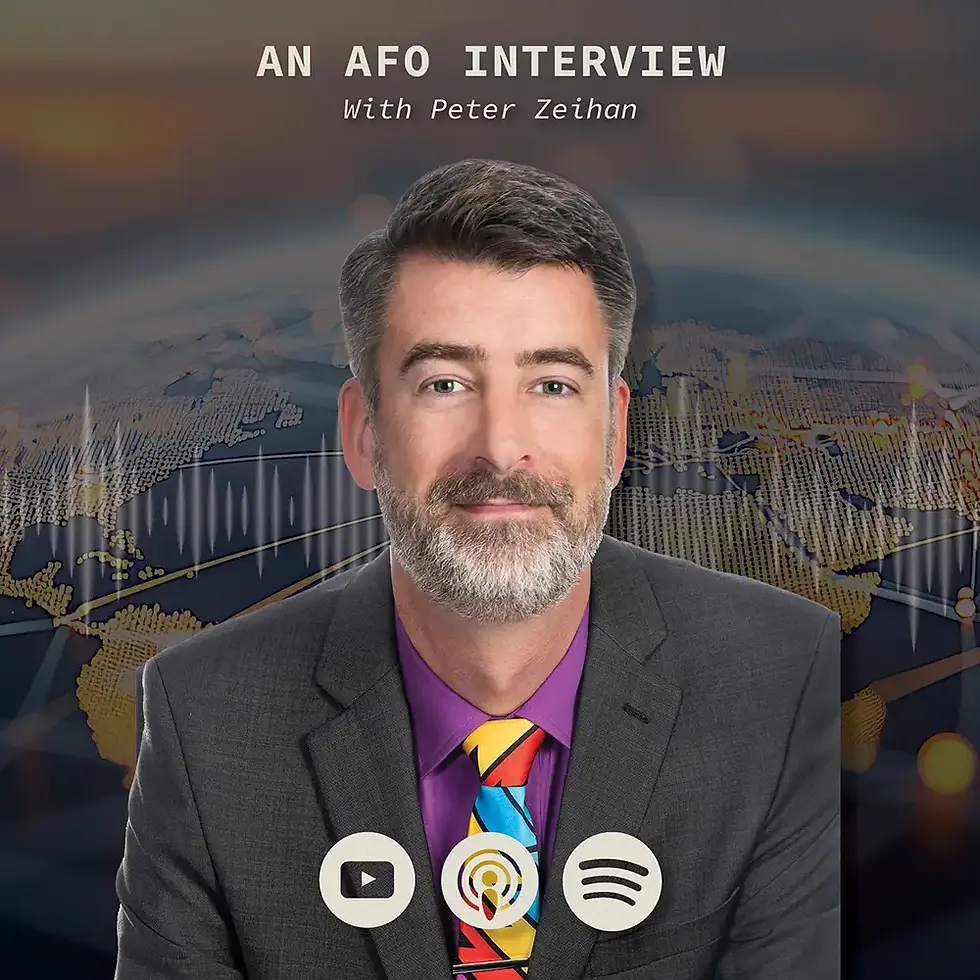
Geopolitical Expert Jacob Shapiro: Here’s What D.C. Gridlock Could Mean

Listen and Subscribe on YouTube | Spotify | Apple Podcasts
Farmers, ranchers, and investors will stay focused on their finances, but don't expect Congress and the president of the United States to suddenly do a better job of managing yours. At least that's the thinking of geopolitical expert Jacob Shapiro.
Shapiro is strategic partner and geopolitical advisor at The Bespoke Group, a wealth strategy firm, and offers guidance to corporations, investors, and families on how policies and actions around the globe impact the future.
Shapiro told American Farmland Owner from his office in New Orleans that he expects Washington, D.C. to remain largely gridlocked, with political rhetoric taking priority over meaningful action.
Several new developments give Shapiro plenty to consider in the weeks ahead as he gauges the United States' political future:
The country's debt nears $41 trillion, a staggering number for most people to comprehend.
Spending on artificial intelligence development has largely been driving the financial markets.
Although, markets immediately fell after President Donald Trump announced another round of tariffs. This time, it's 20% for the new tariff threats.
New data measuring Personal Consumption Expenditures (PCE), the Fed's preferred inflation gauge, increased to 3.8%.
Gridlock in Washington, D.C.
Shapiro doesn't believe the country has reached the point where federal lawmakers feel compelled to make difficult decisions even as the country once again will have divided government with Trump, the Republican president, and Democrats taking over majorities in both the U.S. Senate and U.S. House of Representatives.
"I don't see anything beyond rhetorical flourishes at this," Shapiro said. "I would go back to that (former British Prime Minister in the 1940s and 50s) Winston Churchill quote that you can expect Americans to do the right thing after they've exhausted all the other options. We are busy exhausting all the other options right now."
Jacob Shapiro bio:
The Bespoke Group – Strategic Partner, Geopolitical Advisor
The Jacob Shapiro Podcast – Host
Cognitive Investments – Former Partner and Director of Geopolitical Analysis
Geopolitical Futures – Former Director of Analysis
Stratfor – Former Middle East Analyst/Operations Center Director
What Does Gridlock Mean for Agriculture?
For people in agriculture, that means the issues affecting their businesses, from federal spending and interest rates to inflation and energy costs, could remain caught in Washington's political crossfire.
Shapiro believes the country's relatively strong headline economic numbers are helping delay the kind of fiscal reckoning that might otherwise force lawmakers to work together.
"The economy's too good," he said. "And it's been too good for the last 30 to 40 years. And AI is propping it up right now."
How Is AI Spending Supporting Financial Markets?
He argues that massive investments in artificial intelligence, particularly the construction of data centers and related infrastructure, are helping support financial markets and economic activity even as other parts of the physical economy show signs of weakness.
That distinction matters, Shapiro said. The stock market may be performing well, but that doesn't necessarily mean businesses and households are experiencing the same strength.
"When you look at just the sheer numbers of what AI is doing to markets, construction, everything else, it's propping up an economy that, besides the AI data center economy, looks fairly weak," he said.
The question is how long that investment boom can continue.
Shapiro said a slowdown in AI spending could expose weaknesses that are currently being masked by the market's enthusiasm. But he doesn't know whether that happens in six months or two years.
"The market is buzzing right now, even as the physical economy is showing signs of weakness," he said. "So, I think the market will take note when that AI spending starts to come off the boil."
What to Watch in the Economy
For now, he sees three economic indicators worth watching: unemployment, inflation, and interest rates. All three are moving in the wrong direction, he said, but none has reached a level that would force Americans to reconsider their political priorities.
Shapiro also cautioned against viewing today's economic conditions as an unprecedented crisis.
Interest rates around 6% may feel unusually high to younger Americans who became accustomed to cheaper borrowing, but they are not historically extraordinary. Inflation remains elevated, but it is nowhere near the levels experienced during the 1970s.
Even the geopolitical uncertainty surrounding energy markets has not produced the economic shock some might have anticipated.
Shapiro pointed to disruptions in the Strait of Hormuz and the ongoing conflict with Iran as examples of significant international instability that have not translated into the kind of economic emergency that would force Washington to act.
"I don't think you will see fiscal discipline, or voices for fiscal discipline, until it is forced on American politicians, until people really ask for it," he said.
And right now, he doesn't believe voters are demanding it.
Instead, Shapiro sees an electorate more interested in populist promises and candidates who reinforce their ideological positions than politicians willing to make difficult spending decisions.
Federal Debt
That presents a particular challenge for anyone hoping Congress will address the federal government's long-term financial problems.
Even if one political party decides fiscal responsibility should become its defining issue, Shapiro doesn't believe the next two years will provide much opportunity for meaningful change.
"Remember what I said at the very start, it's gridlock for the next two years," he said. "So, even if the Democrats wanted to be the party of fiscal discipline, they can't. There's nothing anybody can do for the next two years. We're locked into our current system."
For farmland owners, the implications extend beyond the next congressional session. Federal fiscal policy influences borrowing costs, inflation, energy markets, and the broader economic environment that helps determine farmland values and farm profitability.
But Shapiro's message is that Washington is unlikely to make those long-term challenges its immediate priority.
The next two years may reveal whether artificial intelligence can continue supporting economic growth or whether the underlying weaknesses become harder to ignore.
Until then, expect plenty of political noise and relatively little progress on the nation's fiscal challenges.
As Shapiro sees it, Washington may eventually do the right thing. The question is how many other options the country will exhaust before getting there.