Supreme Court Decisions Could Impact Agriculture


Two U.S. Supreme Court rulings last week could affect farmland owners in two different ways: fertilizers and workforce. One involves a top priority for the Trump administration, and the other could prevent numerous lawsuits across the country.
The Court ruled 7-2 in Monsanto v. Durnell that federal law overrides state-level claims that require pesticide makers to include cancer warnings on their products. The decision could protect pesticide manufacturers like Bayer (the company that purchased Monsanto) from further civil litigation awards in state courts for failing to warn users about health risks from exposure to its products like Roundup.
Justice Brett Kavanaugh, who authored the majority opinion, wrote that the Federal Insecticide, Fungicide, and Rodenticide Act (FIFRA) should pre-empt any claims in state law that could require pesticide companies to include warning labels for health safety that go beyond what the Environmental Protection Agency requires.
Previous ruling against Monsanto for Roundup
The Court’s ruling overturns a Missouri jury’s $1.25 million verdict that awarded John Durnell, a
gardener who claimed that his prolonged exposure to Roundup caused his non-Hodgkin’s lymphoma.
A Georgia jury previously ordered Bayer to pay nearly $2.1 billion in damages to John Barnes, who said that his use of Roundup caused his non-Hodgkin’s lymphoma.
This week’s Supreme Court ruling could block thousands of lawsuits from people who claim that using Roundup for farming or gardening purposes caused cancer.
No federal agency has ruled that the product directly causes cancer, and Bayer has proclaimed its product’s safety.
RELATED: In April, American Farmland Owner looked at how America could find new ways for more affordable fertilizer.
Supreme Court decision on migrants seeking asylum
The Supreme Court also ruled in favor of the Trump administration in a case that could prevent more migrants seeking asylum from entering the country. The Court by a ruling of 6-3 in Mullin, Secretary of Homeland Security, et al v. Al Otro Lado et al, overturned a lower court order that blocked the practice of limiting how many people could apply for asylum each day.
Trump’s intentions expanded efforts that the Obama administration had used, and he continued during his first term in office.
Asylum restrictions stop migrants at border
Advocates for migrants have complained for years that the restrictions force scores of migrants to camp in unsafe conditions at the U.S. and Mexico border as they wait for weeks or months for the chance to enter the country.
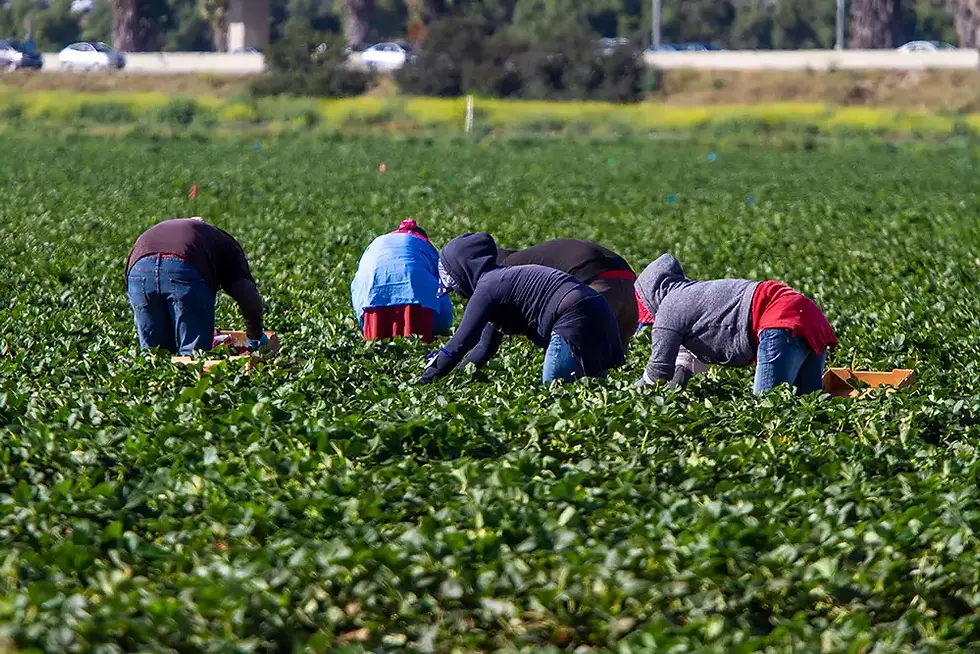
Many migrants who seek employment in agriculture in the United States did not originally enter the country as asylees. But the USDA reported that nearly 70% of farm workers are immigrants, underscoring how critical they are to the agricultural workforce.
Further reducing the immigrant population could add additional strain for farmers unless they can find domestic labor elsewhere or mechanization to replace the immigrant labor.
RELATED: This agricultural leader shared with American Farmland Owner what policies could help industries that require year-round immigrant labor.