Oregon Offers Prime Cattle Country Without the Premium Price Tag


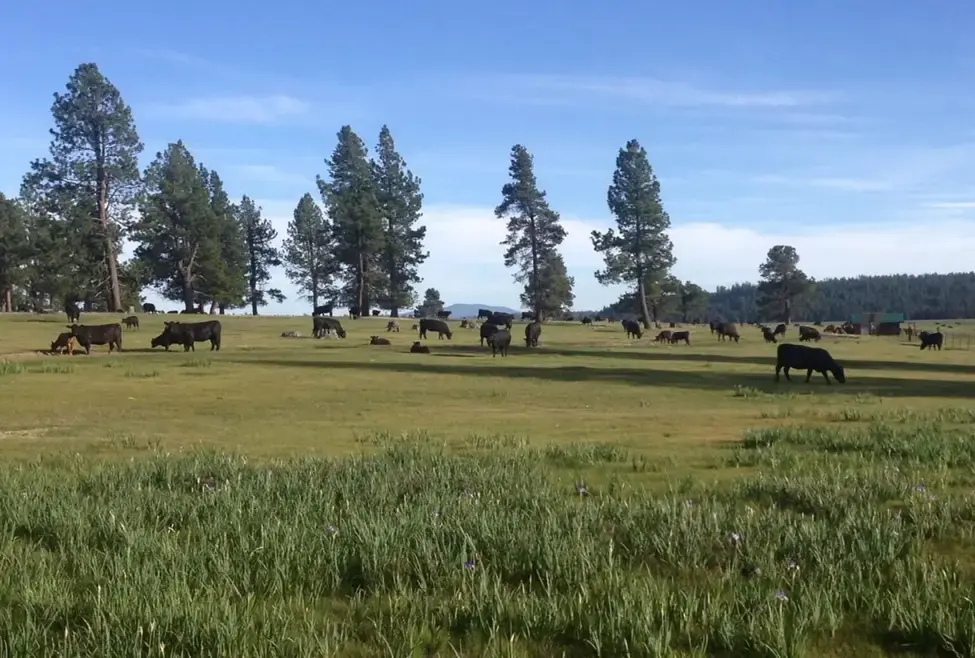
An 800-acre cattle ranch in southern Oregon sold in February for $5,000,000. Pictures of the high-elevation ground look like something you would see on a postcard. With the Cascade Mountains in the background, rolling terrain, and abundant wildlife, the beauty of the land makes it seem less like a working ranch and more like a place you would go on vacation to get away from it all.
But Jackson Creek Ranch is a busy place for the cattle and the workers who arrive each spring.
Summer Cattle Ranch
“Typically, with a property like this, you would summer your cattle here,” said Jerry Hicks, principal broker with Fay Ranches, who sold the property. “You go to a lower, milder climate in the winter, then come back to this ranch in May or June and stay until November.”
This summer ranch outside Chiloquin in south-central Oregon can support about 300 cow-calf pairs. Cooler temperatures and abundant high-elevation forage provide an ideal environment for cattle to escape summer heat and for producers to wean calves.
Hicks said the property sold quickly after being listed by Fay Ranches. He contacted a neighboring landowner, and the two parties reached an agreement. Jackson Creek Ranch was listed for $5.3 million and ultimately sold for $5 million. According to Hicks, the purchase will allow the new owner to expand his operation.
Ranches in this region often support cattle from outside Oregon. In this case, the new owner brings cattle from Nevada, while many others in the area source cattle from Northern California. “It’s very common for ranchers in California to own or lease these high-elevation ranches here in Oregon,” Hicks said.

Recreational Retreat
In addition to its agricultural value, the Oregon ranch offers significant recreational appeal. Hicks describes it as a property that delivers both productivity and lifestyle.
“There is a high recreational value here because of both the location and the scenery,” he said.
The ranch includes 380 acres of timber and supports a range of wildlife, including Rocky Mountain elk, mule deer, antelope, and upland game birds. Its water features further enhance opportunities for hunting, fishing, and outdoor recreation.
Market Trends
Hicks said the Jackson Creek Ranch sale is one of many he has handled so far in 2026, making this year notably stronger than the previous one in terms of transaction volume.
“Our real estate market moves in cycles,” he said. “Last year was slower in our immediate area, but this year has started off extremely strong. In the first couple of months alone, we’ve nearly matched what we did all of last year.”
Hicks attributes the uptick to a combination of factors, including a stable cattle market, lower interest rates, and growing recognition of real estate as a relatively secure investment. However, he noted that uncertainty remains, particularly due to global geopolitical tensions.
Oregon farm real estate values have seen strong growth in recent years. An analysis of the latest U.S. Census of Agriculture data by Oregon State University economist Dan Bigelow found the state’s farm real estate value increased by $10.7 billion from 2017 to 2022—a 23% gain. That’s more than triple the 7% increase recorded nationwide over the same period.
Oregon’s Value
Hicks emphasized that Oregon continues to offer strong value in the cattle ranch market, in part due to common misconceptions about the state’s geography.
“Two-thirds of Oregon is high desert and timbered mountains. It’s not just the rainforest people often think it is,” he said, referring to the well-known rainy coastal areas the state is famous for.
“As a result, we have large ranches with expansive grazing land. A comparable property in Montana, Wyoming, or Colorado could cost two to three times as much,” Hicks explained.
He added that eastern Oregon’s climate is similar to parts of Idaho, Montana, and Colorado, further supporting its viability for cattle operations.


